"... Playboy was quietly relaunched this year — this time as a thick-stock, matte-paper, ad-free quarterly. It is edited by a millennial triumvirate..."
"... the openly gay Mr. Singh, 31; Erica Loewy, 26, the creative director; and Anna Wilson, 29, who oversees photography and multimedia.... The summer issue, out now, features an interview with Tarana Burke, the activist who founded the MeToo movement, conducted by Dream Hampton, whose documentary about R. Kelly led to multiple charges against the singer. There is a queer cartoon and a feature on gender-neutral sex toys. The fall issue will feature a photo feature by the artist Marilyn Minter celebrating female pubic hair. 'We have red hair, blond hair, black hair — it’s basically every color of the rainbow,' said Liz Suman, 35, the magazine’s arts editor. She added that elsewhere in the publication, 'I’ve been sneaking in some penises, too.'.... In the office, members of the staff use terms like 'intersectionality,' 'sex positivity,' 'privileging' and 'lived experience' to describe their editorial vision — and tout their feminist credentials. Two editors are former employees of Ms.... 'We talk a lot about what’s the Playboy gaze and how we need to diversify that,' said Rachel Webber, 37, the chief marketing officer.... 'It’s a little like being in a gender studies class,' she added."
From "Can the Millennials Save Playboy?/The Hefners are gone, and so is the magazine’s short-lived ban on nudity — as well as virtually anyone on the staff over 35" (NYT).
Playboy is just a brand name. You can completely change a product under a name. Will it work? Was there enough value in the old version of the product that it's not good business to repurpose the name? Look at this big NYT article they got out of it!
Remember Cosmopolitan magazine?
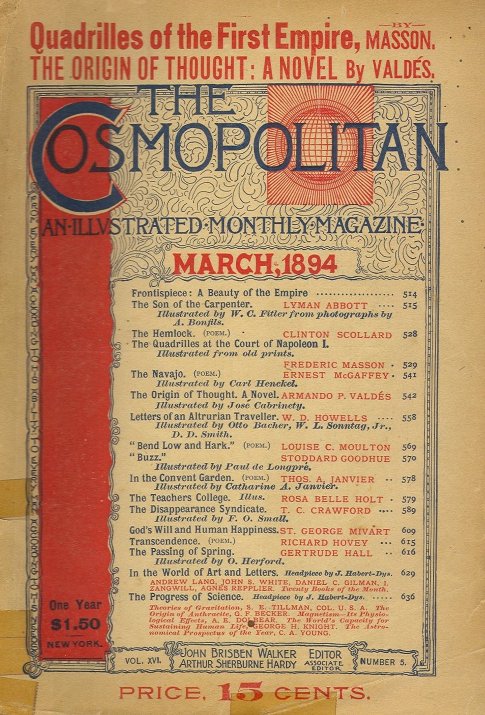
It had been around since 1886 when Helen Gurley Brown took over in 1965. Originally, it was introduced as a "first-class family magazine" with articles on fashion, interior decoration, childcare, and cooking. In 1905, William Randolph Hearst took over and changed it into a place with articles like "The Growth of Caste in America" and writers including George Bernard Shaw and Upton Sinclair, and Ida Tarbell. By the 1950s, the circulation was way down and it was considered very dull.
Helen Gurley Brown took over and completely changed it into an active promotion of sex for the single woman.
From "Can the Millennials Save Playboy?/The Hefners are gone, and so is the magazine’s short-lived ban on nudity — as well as virtually anyone on the staff over 35" (NYT).
Playboy is just a brand name. You can completely change a product under a name. Will it work? Was there enough value in the old version of the product that it's not good business to repurpose the name? Look at this big NYT article they got out of it!
Remember Cosmopolitan magazine?
It had been around since 1886 when Helen Gurley Brown took over in 1965. Originally, it was introduced as a "first-class family magazine" with articles on fashion, interior decoration, childcare, and cooking. In 1905, William Randolph Hearst took over and changed it into a place with articles like "The Growth of Caste in America" and writers including George Bernard Shaw and Upton Sinclair, and Ida Tarbell. By the 1950s, the circulation was way down and it was considered very dull.
Helen Gurley Brown took over and completely changed it into an active promotion of sex for the single woman.
In Brown's early years as editor, the magazine received heavy criticism. In 1968 at the feminist Miss America protest, protestors symbolically threw a number of feminine products into a "Freedom Trash Can." These included copies of Cosmopolitan and Playboy magazines. Cosmopolitan also ran a near-nude centerfold of actor Burt Reynolds in April 1972, causing great controversy and attracting much attention....ADDED: One nice thing about the new Playboy website is access to old Playboy interviews. I once subscribed to Playboy, the website, just because I wanted to read the Allen Ginsberg interview (from 1969). But here it is now, free: "A poet, a mystic, a homosexual, a psychedelic proselyte, a revolutionary, a bearded prophet of doom for what he considers society's 'sick' values, he is among the most famous and certainly the most controversial of living poets." There was plenty of detail about homosexuality in that interview (which I read when I was 18, in my family home, where Playboy was always openly available):
Victoria Hearst, a granddaughter of William Randolph Hearst..., has lent her support to a campaign which seeks to classify Cosmopolitan as harmful under the guidelines of "Material Harmful to Minors" laws. Hearst, the founder of an evangelical Colorado church called Praise Him Ministries, states that "the magazine promotes a lifestyle that can be dangerous to women's emotional and physical well being. It should never be sold to anyone under 18."...
Would you explain what you mean when you say there's a natural element of homosexuality in every man?Playboy at its best! And not entirely different from what Playboy has become now.
There's homosexuality in every Playboy reader. To say that in a Playboy Interview is interesting because obviously every Playboy reader expects me to say that; so I'll say it and liberate him from his fear that somebody will say it sooner or later.
So I hereby announce: Everybody is acknowledged not as a homosexual or heterosexual but as a complete person with all the aspects of that completeness—all the dreams, hard-ons, wet night-mares, anxieties, buddies, all secret masturbations and all refusals to masturbate. Any more rigid masculine ideal would be a perversion of human nature—heartbreaking because unsatisfiable.
Have you been able to fully accept your own homosexuality?
Homosexuality has been like a koan—a Zen riddle—for me. Whole areas with my mother were screwed up and conditioned me in this way sexually. The riddle was: How do I deal with my homosexuality? Do I accept it or reject it or freak out, or do I go into it and find out what it is? Another problem: Is it something public? Anything that common is public; anything that happens to us is as good or bad as anything else as a subject for poetry. It's actual. So I can write naturally about my own homosexuality. The poems get misinterpreted as promotion of homosexuality. Actually, it's more like promotion of frankness, about any subject. If you're a foot fetishist, you write about feet; or if you're a stock-market freak, you can write about the rising sales-curve erections in the Standard Oil chart. When a few people get frank about homosexuality in public, it breaks the ice; then anybody can be frank about anything. That's socially useful.
Is that what you meant when you told Life that by announcing in public that you're a "homosexual, take drugs and hear Blake's voice, then people who are heterosexual, don't take drugs and hear Shakespeare's voice may feel freer to do what they want and be what they are"?
Yes, then anybody who wants to can get up and say, like, "I fuck girls!" or "I'm not scared to wear a Brooks Brothers suit" or "I wear my hat indoors or out as I please," Which Whitman said. But I don't stand up in public and suddenly announce, "I'm a bearded-beatnik-bohemian-faggot-dope-fiend" to boat about it. When somebody asks me: "Why don't you shave?" or "Are you willing to admit you smoke marijuana?" and "You look as if you have Communistic tendencies" or "You need a good bath!"—well, then, I say: "My beard just grows, I didn't plant it, I don't get up every morning and try to murder my hair and obliterate my human image. It's just Adam's hair. Yes, I like to make it with boys; I'm not sure whether it's good or bad; it feels all right so I describe it. And I admit I smoke dope. But I think police-state bureaucrats mounted their secret conspiracy to suppress marijuana in order to create police-state conditions. And I am a Communist of the heart, except that I've been bricked off the set by police in Communist Prague and Communist Havana—and 'Communist' Chicago. I was kicked out of Havana and Prague for talking about homosexuality."
It doesn't sound as if you buy the psychoanalytic theory that homosexuality is a neurosis that cripples or limits a man's emotional growth.
Homosexuality is a condition, and like all average things, it has advantages and disadvantages. Obvious disadvantages are that it keeps you from reproducing your own image, if that's biologically important anymore; and it shuts me off from full relations with women. Though unless a chick is really trying to make it with me, I'm affectionate and physical and sexy enough toward women to give out some normal social, happy cheer when I'm with them. The advantages are that homosexuality provides me with sufficient affection and gasoline to communicate on a tender level with my fellow citizens, especially the Prussian butch-crewcut freaky military types—the old Socratic situation. Also, because it alienated or set me apart from the beginning, homosexuality served as a catalyst for self-examination, for a detailed realization of my environment and the reasons why everybody else is different and why I am different. In a tank-military hyper-sadistic and the unconscious and the full man, my homosexual specialization made me aware of the rigid armoring, defensiveness, overcompensation and high camp put on by police-state police.
It's like the old shamans who are often androgynous or homosexual: Since they're outside normal routine, they're specialized social critics and have sensitivities that others don't have; they're men who see aspects of male history from a woman's point of view. That spectrum of experience is a useful information bank of supplementary intelligence that can be of real value in community self-understanding and awareness. Anyone in that position has enough troubles fulfilling such heavy duties to the society without being hit on the head for being a fairy; he should be kissed, instead. In fact, innumerable young men ought to offer their bodies to him in order to recompense him for the suffering solitariness of his freaky prophecy-hood. And they should come up offering their bodies before I get too old to enjoy it.
You mentioned that not having children is one of the disadvantages of being homosexual, and that you envision "family life" ahead during LSD trips. Do you still want to be a father?
I did a while back, but I ran into a funny, long-haired Indian Vishnuite to whom I talked a lot about my problems. He said, oddly, "Give up desire for children." Which made me mad. Who was he to tell me to cut myself from that desire? Later, I realized what he meant: Give up attachment, compulsion to have children on account of you're a Jewish boy from New Jersey; if you want children or if they come, fine, but don't have children because you're supposed to. Anyway, there are already too many people and lost unattached children in the world today. So I'm an old cranky bachelor wanting to stay with my poetry and run around doing what ever thing I'm doing, and I think I might be satisfied to leave it at that. Still, it might be good to have this self-importance broken up by "a Zen master in the house all the time," which is how Gary Snyder, the poet, describes his first child.
Comments
Post a Comment